
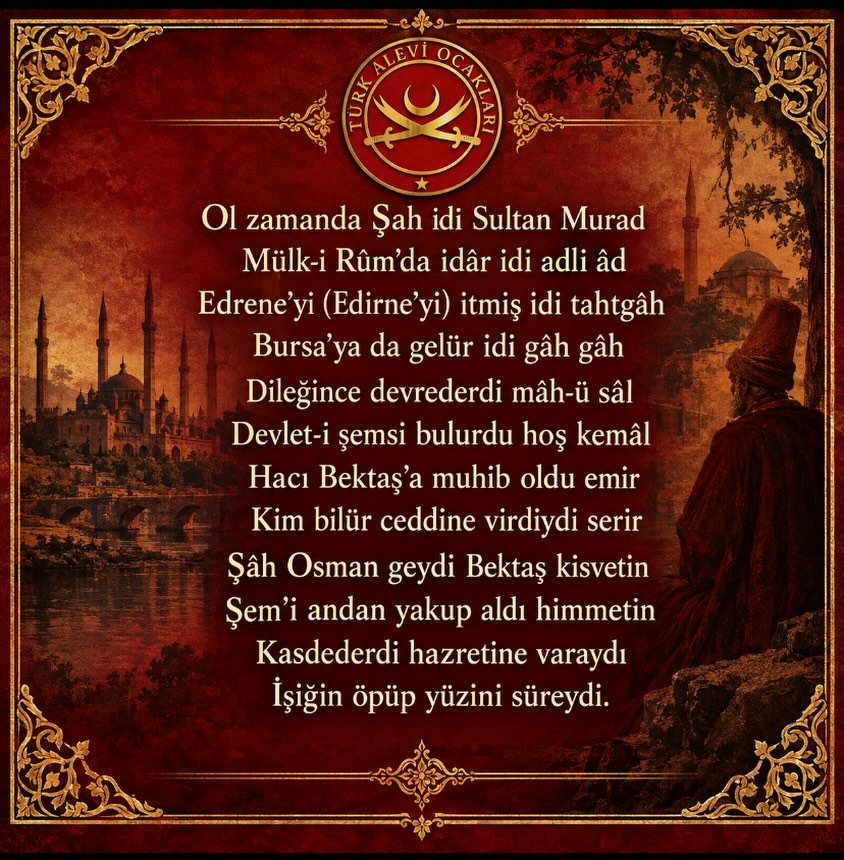
Our organisation’s official account shared a passage in verse attributed to the Hacı Bektaş-ı Velî Velâyetnâme. Through a narrative of the heartfelt bond between rulers and Hacı Bektaş, the passage draws attention to Bektashi memory.
What kind of work is the Velâyetnâme?
The Hacı Bektaş Vilâyetnâme is a hagiographic work collecting accounts about Hacı Bektaş-ı Velî. Surviving in prose and verse versions, it is an important source for studying how the Bektashi tradition tells its own story.
Narrative language and historical research
Hagiographic narratives convey spiritual allegiances, exemplary figures and a community’s values. This form of storytelling must be kept in mind when reading. Rather than turning a social media excerpt, stripped of context, into a definitive historical judgement on its own, it is sounder to assess it alongside the whole work and relevant research.
Reading with the source
The full passage is available in the organisation’s post below. For the work’s versions and research history, Ahmet Yaşar Ocak’s entry ‘Hacı Bektaş Vilâyetnâmesi’ in the TDV Encyclopaedia of Islam is a starting point.